GLP-3R
GLP‑3 is a synthetic peptide research compound developed as a GLP‑derived analog designed for laboratory investigations involving incretin‑related and metabolic signaling pathways. Characterized by a defined amino‑acid sequence and documented molecular identity, GLP‑3 is used in research settings to study peptide structure–function relationships, receptor‑interaction behavior, and comparative signaling dynamics within glucagon‑like peptide systems.
Researchers value GLP-3 for its triple-receptor agonist profile that enables advanced studies on metabolic homeostasis, weight regulation, and liver health in controlled models. Its proprietary structure provides a unique tool for comparative incretin research.
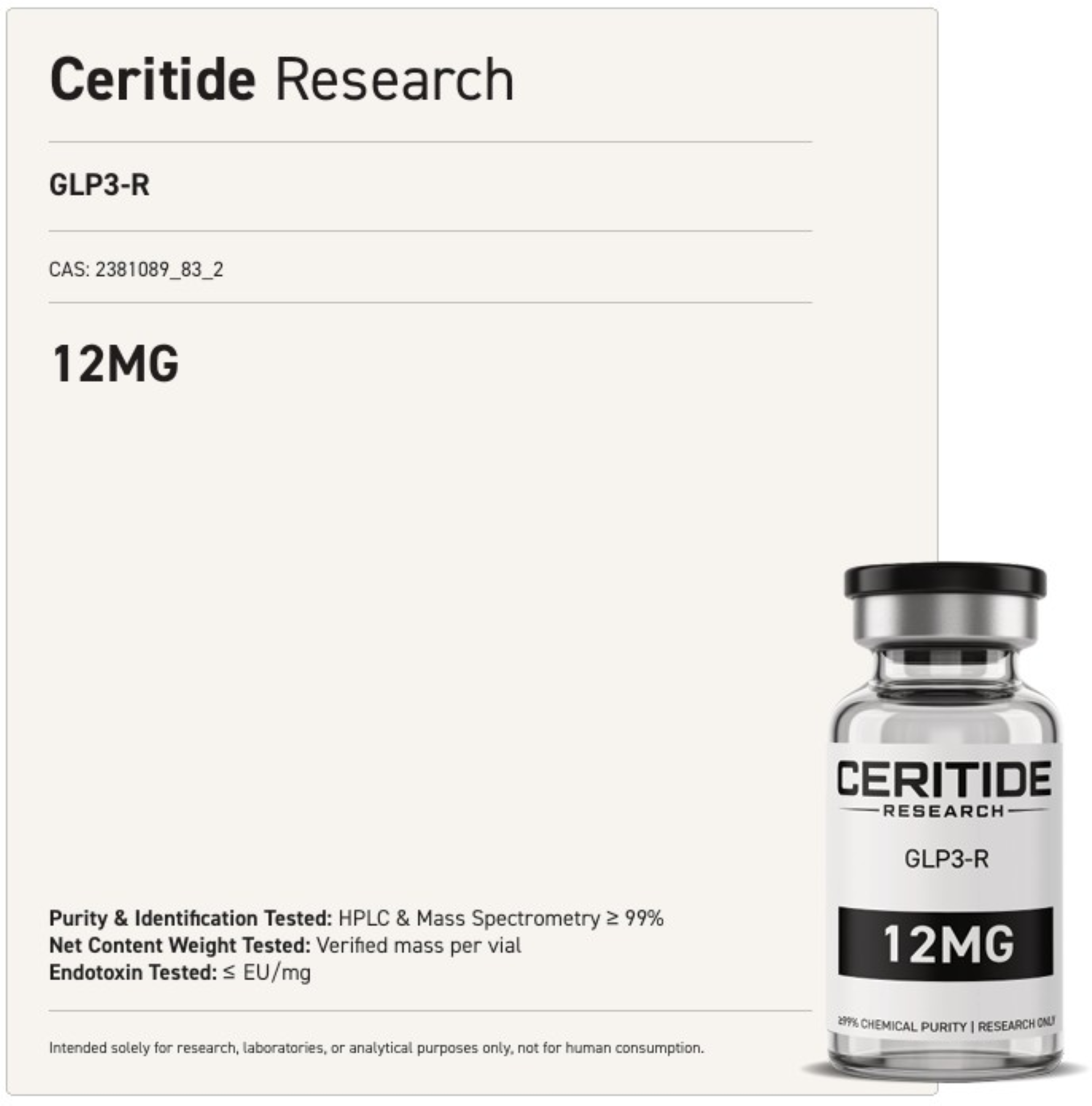
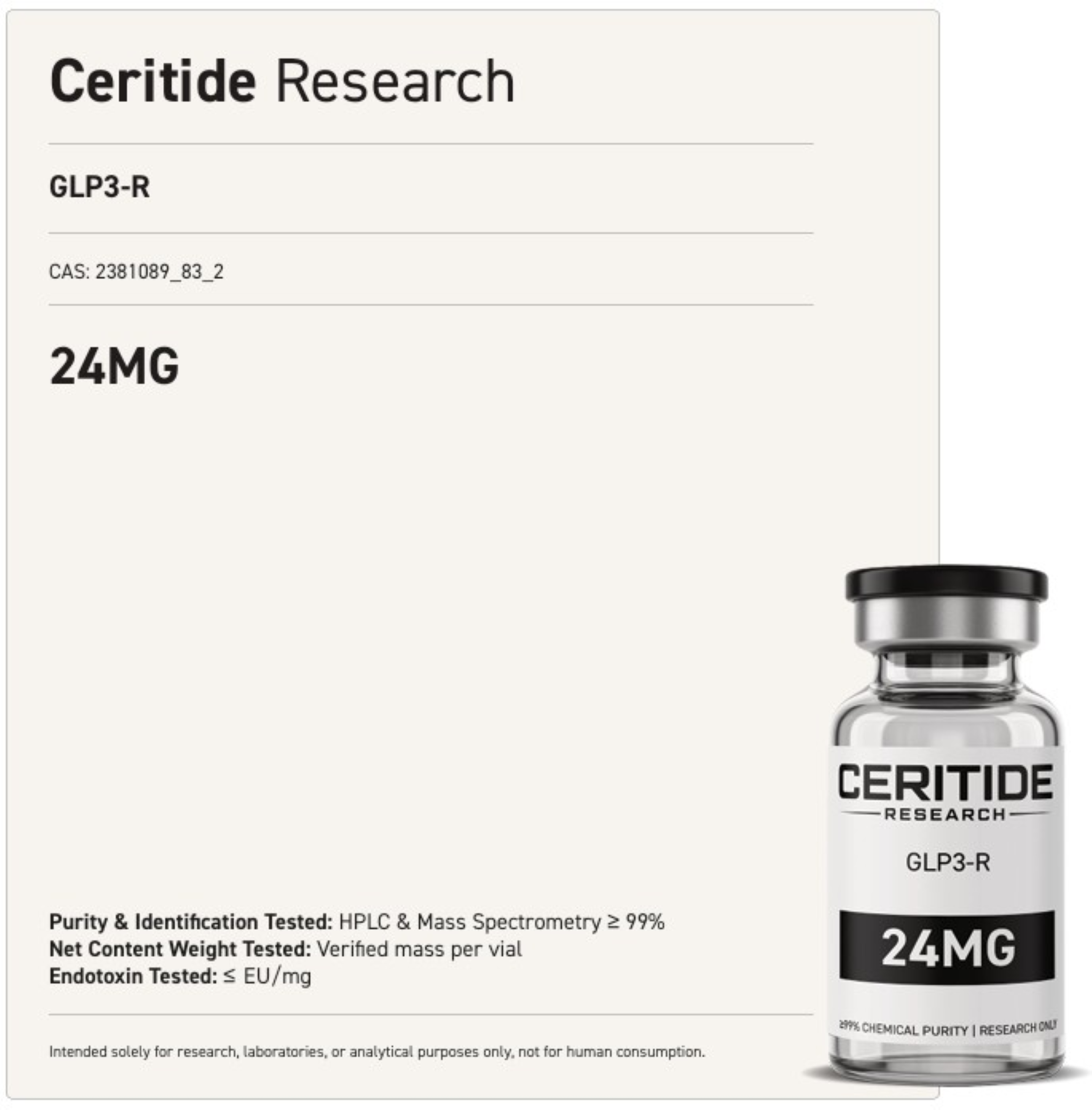
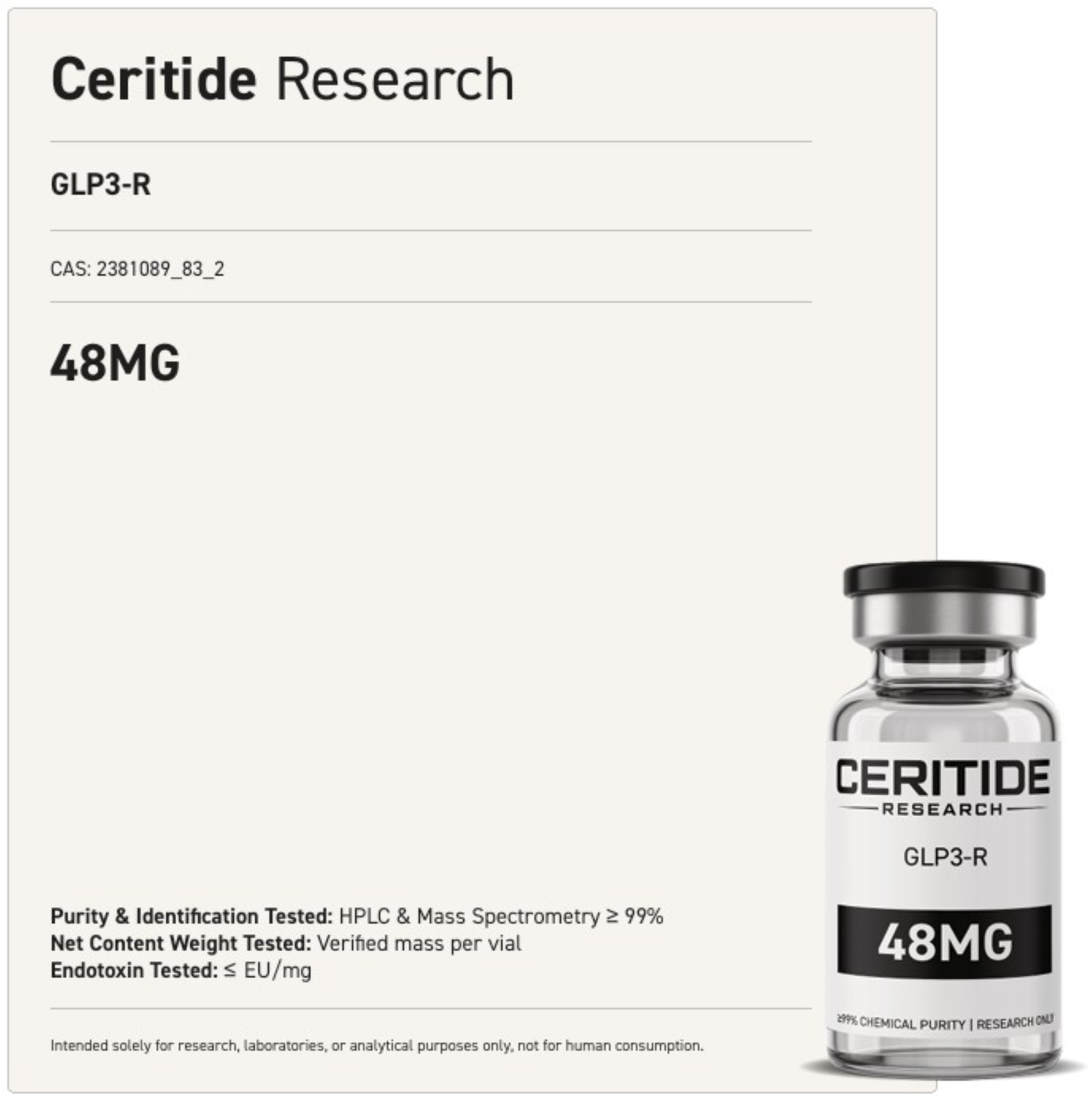
Ceritide Research offers GLP-3R as a premium 12mg, 24mg and 48mg lyophilized research peptide with verified ≥99% purity confirmed by independent HPLC and mass spectrometry. Supplied in a sterile vial and ready for immediate reconstitution per your protocol, this product delivers the reliability top research labs demand.
The Purest Peptides. Period.
Research Use Only. Not for human or veterinary use.
- Size: 12MG, 24MG, 48MG
- Form: Lyophilized Powder
- Appearance: White to off-white powder
- Weight:
- Dimensions: 2" x 2" x 2"
- Chemical Purity: >99%
- Purity & Identification Testing: HPLC & Mass Spectrometry
- Net Content Weight Testing: Milligram Weight
- Endotoxin Testing: < 0% Bacterial Endotoxins
- Regulatory Status: Research Use Only (RUO)
- Chemical Grade: Laboratory, Research, and Analytical

- CAS: 2381089‑83‑2
- Molecular Formula: C₂₂₃H₃₄₃N₄₅O₆₉
- Molecular Weight: 4197.7 g/mol
- Amino Length: 39 Amino Acids (excluding lipid side chain)
- Classification: Synthetic Peptide / Triple Receptor Agonist
- Structure:
- Sequence: The exact amino‑acid sequence of retatrutide (also referred to as GLP‑3R in some research catalogs) is not publicly disclosed. Retatrutide is a proprietary synthetic peptide developed by Eli Lilly (development code LY3437943), and its full primary sequence has not been released in peer‑reviewed publications, patents with full sequence listings, or regulatory summaries available to the public.
- Synonyms:
- NIH PubChem: View compound profile on NIH PubChem
- NIH PubMed Article:
Peptide Storage Guidelines: Best Practices for Research Stability
At Ceritide Research, we provide high-purity peptides for laboratory and scientific research. Proper storage preserves peptide integrity and supports reliable experimental results.
Storage Guidelines for Lyophilized (Powder) Peptides
- Long-Term Storage: Keep at -20°C (-4°F) or lower (ideally -80°C / -112°F) for multi-year stability.
- Short-Term Storage: Refrigerate at 2–8°C (36–46°F) for weeks to a few months. Minimize room temperature exposure.
- Best Practices: Store in airtight vials with desiccants. Allow vials to reach room temperature in a desiccator before opening. Protect from light and moisture. Aliquot to reduce freeze-thaw cycles.
Storage Guidelines for Reconstituted Peptide Solutions
Once dissolved, peptides are less stable and should be used promptly:
- Recommended Temperature: Store at 2–8°C (36–46°F) (refrigerator) for short-term use, typically up to 1–4 weeks depending on the sequence and buffer.
- Longer-Term Solution Storage: Aliquot and freeze at -20°C (-4°F) or lower. Avoid storing solutions long-term when possible.
- Best Practices: Use sterile techniques, bacteriostatic water or research-grade buffers, and minimize exposure to air and light. Prevent repeated freeze-thaw cycles.
For Research Use Only
All products from Ceritide Research are sold for research, laboratory, or analytical purposes only, and are not for human consumption. Our peptides are intended exclusively for in vitro scientific research and are not for human or veterinary use.
Choose options